


Interested in becoming a land surveyor? This guide explains how to become a land surveyor, including the education requirements, licensing exams, and career steps needed to enter the profession. You’ll learn what land surveyors do, the skills required to succeed, and how to prepare for the path to becoming a licensed professional land surveyor.
A Real-World Path Into Surveying
Many surveyors enter the profession in unexpected ways.
Robert Martin, founder of Surveying with Robert, says he got started in surveying through what he jokingly calls “dumb luck.”
“I needed a job. I had a family member working for a surveying firm who told me they had an opening. I went in and told the owner I didn’t know anything about surveying, but if he gave me 60 days I’d prove I could learn.”
Robert started as a rodman, an entry-level position on a survey crew responsible for assisting with measurements and carrying the survey rod. Over time, he worked his way up through the field crew to become a crew chief, gaining hands-on experience in boundary surveys, construction layout, and data collection.
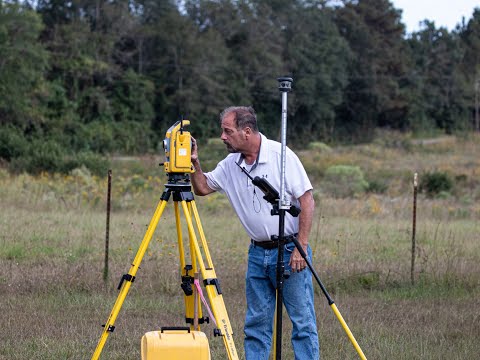
Stories like this are common in the surveying industry. Many professionals begin in entry-level field roles and build their careers through hands-on experience and mentorship.
What Does a Land Surveyor Do?
Land surveyors measure and map land to determine property boundaries, elevations, and geographic features. Their work plays a critical role in real estate transactions, infrastructure projects, construction planning, and land development.
Professional surveyors use a combination of advanced technology and field measurements to collect data and produce accurate maps, reports, and legal property descriptions.
Common responsibilities include:
- Measuring land boundaries and property lines
- Collecting spatial data using GPS and surveying instruments
- Creating maps and site plans
- Supporting engineering and construction projects
- Preparing legal descriptions for property records
- Helping resolve boundary disputes
Surveyors often collaborate with engineers, architects, developers, and government agencies to ensure projects are built in the correct location and comply with regulations.
According to Robert, the variety of work is one of the reasons many people enjoy the profession.
“You’re not stuck doing the same thing all day. You might go to different sites in one day or spend a whole day working on one project. You’re outside, you’re moving around, and every job is a little different.”
Why Become a Land Surveyor?
Surveying is an attractive career for people who enjoy a mix of technical problem solving and outdoor work.
Some of the biggest advantages of the profession include:
- Strong demand for skilled surveyors
- Opportunities to work in construction, engineering, or land development
- A mix of fieldwork and office-based analysis
- Opportunities to start your own surveying firm
- Career stability tied to infrastructure and development projects
Surveyors play a critical role in protecting property rights and ensuring accurate land records, which is why licensing requirements are rigorous.
Did You Know?
Surveying also has a long and fascinating history. Three U.S. presidents (George Washington, Thomas Jefferson, and Abraham Lincoln) all worked as land surveyors early in their careers before entering politics.
Over time, professional organizations have helped establish standards and education for the profession. Groups such as the American Congress on Surveying and Mapping (ACSM) helped shape modern surveying practices and professional standards in the United States.
Why the Surveying Industry Needs New Professionals
One challenge facing the surveying profession today is an aging workforce.
In many parts of the United States, the average age of licensed surveyors is approaching the late 50s. As experienced professionals retire, fewer younger surveyors are entering the field to replace them.
According to Robert Martin, this trend is becoming increasingly noticeable across the industry.
“In some states, the average age of a surveyor is around 57. A lot of experienced surveyors are leaving the profession, and there aren’t enough people coming up behind them.”
This shortage is creating strong opportunities for individuals interested in pursuing a surveying career.
Understanding the Land Surveyor Career Path
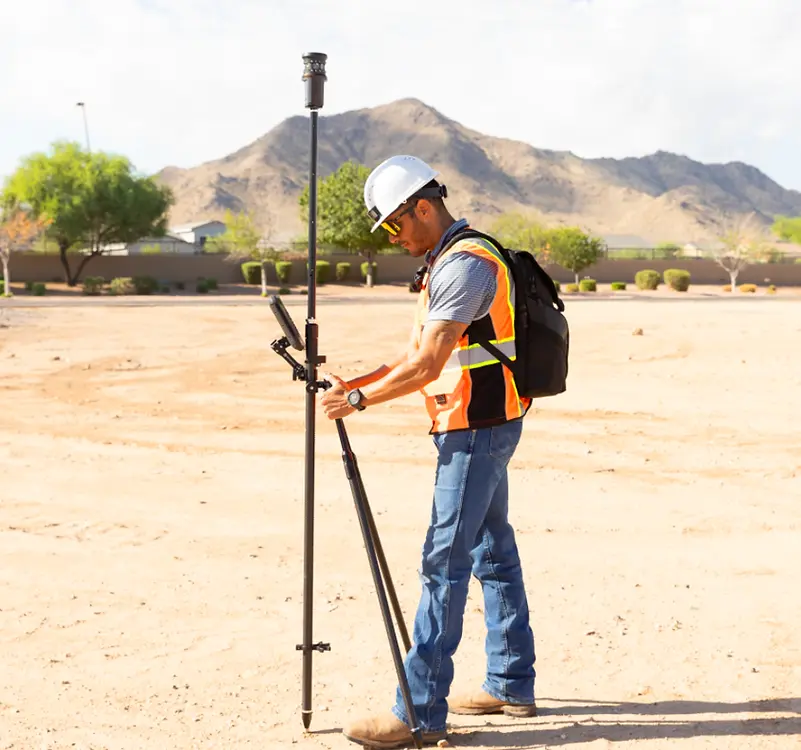
Surveyors work in a wide range of industries, including:
- Construction
- Civil engineering
- Infrastructure development
- Real estate
- Government agencies
- Environmental and land management
Because many experienced surveyors are approaching retirement, strong career opportunities exist for new professionals entering the field.
Common Entry-Level Surveying Field Roles
Most people entering the profession start by working on a survey field crew, where they gain practical experience collecting measurements and assisting with surveying equipment.
Historically, survey crews often included three roles:
- Rodman (or rod person): Assisted with measurements and carried the survey rod used for positioning.
- Instrument operator: Operated surveying instruments such as total stations.
- Crew chief: The experienced surveyor responsible for directing the crew and recording measurements.
According to Robert, this structure has evolved as surveying technology has advanced.
“Years ago, three-person crews were pretty typical. Today, with robotics and GPS equipment, many survey crews operate with just two people — sometimes even one.”
While modern equipment improves efficiency, it can also reduce opportunities for new surveyors to learn through traditional crew structures.
Career Advancement Opportunities
As surveyors gain experience and additional training, they can move into more advanced roles within the profession. Common career progression paths include:
- Crew chief or field supervisor
- Project manager
- Licensed professional land surveyor (PLS)
- Survey department manager
- Business owner or consultant
While many surveyors begin their careers in field positions, formal education and professional licensure often play an important role in advancing within the profession.
Land Surveying Education Requirements
The first step toward becoming a professional surveyor is gaining the necessary education.
Most aspiring surveyors pursue a degree in:
- Surveying
- Geomatics
- Surveying engineering
- Civil engineering or a related field
Many professionals begin with an associate degree or bachelor’s degree in surveying or geomatics, which provides foundational knowledge in areas such as mapping, geodesy, and geographic information systems (GIS).
The National Society of Professional Surveyors (NSPS) supports a bachelor’s degree in surveying or surveying engineering as the preferred educational path for licensure.
Typical coursework may include:
- Trigonometry and geometry
- Geodesy and coordinate systems
- Surveying instruments and measurement
- Boundary law
- GIS and mapping technology
Some states allow alternative pathways that combine education with extensive field experience.
While formal education is important, Robert emphasizes that surveying is still fundamentally a hands-on profession.
“A four-year degree can help you understand things like geodesy and GPS systems,” he explains. “But surveying is still boots on the ground. You have to understand how the equipment works and how to collect data in the field.”
Because of this, many successful surveyors combine formal education with extensive field experience early in their careers.
Skills Needed to Succeed as a Surveyor
Successful surveyors combine technical expertise with strong problem-solving skills.
Technical Skills
- GPS and surveying equipment
- GIS and mapping software
- CAD drafting tools
- Data analysis and measurement
Professional Skills
- Attention to detail
- Strong math and geometry skills
- Communication with clients and project teams
- Physical endurance for fieldwork
Because surveyors work with legal land boundaries, accuracy and attention to detail are critical.
Licensing Requirements to Become a Professional Land Surveyor
After gaining the required education and field experience, the next step toward becoming a professional surveyor is obtaining a license.
To work independently and sign legal surveying documents, surveyors must become a licensed professional land surveyor (PLS). Licensing ensures that surveyors meet professional standards designed to protect property rights, public safety, and the integrity of land records.
While licensing requirements vary by state, most follow a similar process that includes:
- Completing a degree in surveying or a related field
- Passing the Fundamentals of Surveying (FS) exam
- Gaining several years of professional experience under a licensed surveyor
- Passing the Principles and Practice of Surveying (PS) exam
Fundamentals of Surveying (FS) Exam
The Fundamentals of Surveying (FS) exam is typically the first licensing exam on the path toward becoming a professional land surveyor.
The exam is administered by the National Council of Examiners for Engineering and Surveying (NCEES) and is often taken by students in their final year of a surveying or geomatics degree program, or shortly after graduation.
The exam evaluates knowledge in key areas of surveying, including:
- Surveying mathematics
- Boundary and property law
- Mapping and data analysis
- Geodesy and coordinate systems
- Surveying instruments and measurement methods
Passing the FS exam typically grants the designation Surveyor-in-Training (SIT) or Surveyor Intern (SI), depending on the state.
Professional Surveyor (PS) Exam
After gaining several years of professional experience under a licensed surveyor, candidates can take the Principles and Practice of Surveying (PS) exam.
This exam focuses on real-world surveying practice and professional responsibility, ensuring candidates are prepared to perform surveying work independently and make legally binding decisions related to land boundaries.
Passing the PS exam allows candidates to apply for licensure as a Professional Land Surveyor (PLS) through their state licensing board. Some states may also require a state-specific surveying exam before granting licensure.
How Difficult are the Surveyor Licensing Exams?
While candidates with formal surveying education often have an advantage, pass rates for these exams can still be lower than many people expect. Even graduates of four-year surveying programs do not always pass on their first attempt.
According to industry professionals, the challenge often comes from the wide range of topics covered on the exams, including mathematics, boundary law, surveying theory, and practical field applications.
Robert Martin notes that real-world experience often plays an important role in exam success.
“A lot of people assume that if you have a four-year degree, you’ll automatically pass the exam. But the test covers more than just what you learn in school. Field experience makes a big difference.”
This is why many aspiring surveyors combine formal education, practical field experience, and focused exam preparation before attempting the licensing exams.
Step-by-Step: How to Become a Land Surveyor
While the path varies slightly by state, most surveyors follow these general steps:
- Step 1 — Earn a surveying or geomatics degree: Most candidates begin by completing a degree in surveying, geomatics, or a related field such as civil engineering.
- Step 2 — Pass the Fundamentals of Surveying (FS) exam: This exam, administered by NCEES, is typically taken near the end of a surveying degree program or shortly after graduation.
- Step 3 — Gain professional field experience: Aspiring surveyors usually work under a licensed surveyor for several years to develop practical skills and industry experience.
- Step 4 — Pass the Principles and Practice of Surveying (PS) exam: This exam focuses on professional practice, surveying law, and real-world surveying applications.
- Step 5 — Apply for state licensure: After meeting education, exam, and experience requirements, candidates can apply for licensure as a Professional Land Surveyor (PLS).
How to Prepare for Surveyor Licensing Exams
For many aspiring surveyors, preparing for the licensing exams is one of the biggest challenges in the profession.
When Robert prepared for his licensing exams, finding reliable study materials was challenging.
“I remember searching everywhere for study resources,” he says. “There were a few practice exams and some textbooks, but there wasn’t a clear guide that explained exactly what you needed to study.”
He also discovered that the exam content was broader than he initially expected.
“I was told the exam would focus mostly on boundary surveying, but when I took it, a lot of the questions involved construction layout. Without real field experience, those questions would have been hard to answer.”
Many candidates find that while surveying programs teach the technical aspects of the profession, structured exam preparation resources can be limited.
Common preparation strategies include:
- Self-study using textbooks
- Practice problems and exam simulations
- Study groups with other surveyors
- Mentorship from experienced professionals
Because these exams cover a wide range of topics, having a structured study plan can make a significant difference.
Continuing Education and Professional Development
Learning in the surveying profession doesn’t stop after passing the licensing exams. Many states require licensed surveyors to complete Professional Development Hours (PDH) or continuing education credits to maintain their license.
Continuing education helps surveyors stay current with:
- Advances in surveying technology
- Changes in regulations and land law
- New equipment and measurement techniques
- Industry best practices

Educational resources such as Surveying with Robert provide training, insights, and practical instruction designed to help both aspiring and experienced surveyors continue developing their skills throughout their careers.
Explore surveyingwithrobert.com to explore available resources and upcoming training materials.
A New Surveyor Exam Preparation Course (Coming Soon)
Because many future surveyors struggle to find organized study resources, they often end up piecing together materials from textbooks, online resources, and advice from other surveyors.
That’s why our team is developing a Surveyor Exam Preparation Course designed to help future surveyors prepare for the FS and PS exams with practical study guidance and real-world examples.
The course will focus on:
- Key concepts tested on the FS and PS exams
- Practice problems and walkthroughs
- Study strategies used by successful surveyors
- Real-world examples that reinforce exam topics
Interested in getting early access?
Join the early access list to be notified when the course becomes available.